
Jump to
- Fascia and soffit: which is which?
- What happens when rotten fascia is swapped?
- What rots fascia in Memphis?
- Is aluminum cladding a good idea?
- How is fascia work priced?
- What material should replace rotten fascia?
- Why does fascia rot so often in Memphis?
- How is fascia replaced with gutters in place?
- Is soffit damage a sign of something else?
- Fascia and soffit terms
Fascia and soffit: which is which?
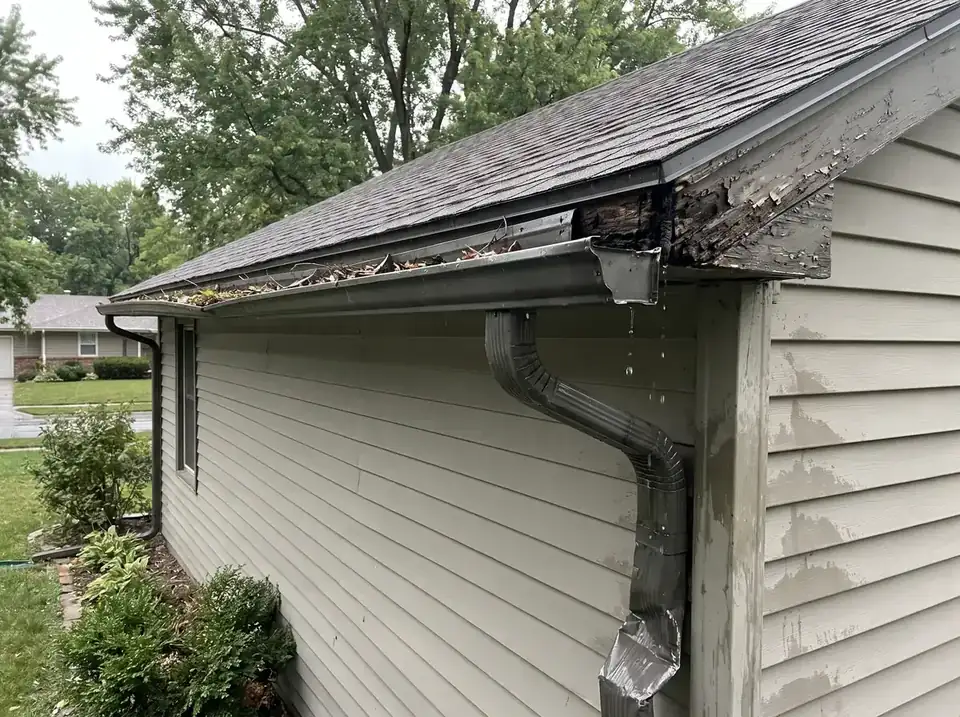
Fascia is the trim board nailed to the rafter ends along each eave, and it carries the gutter. Soffit is the panel that closes in the underside of the overhang back to the wall. When a gutter leaks or spills, both soak up the damage.
| Part | Common materials | Common problems |
|---|---|---|
| Fascia | Painted pine, primed boards, aluminum cladding, PVC, fiber cement | Rot, flaking paint, splits at board ends |
| Soffit | Vented vinyl, aluminum, painted plywood | Sagging, rot at the edge, animals getting in |
| Drip edge | Aluminum or galvanized flashing | Absent, or too narrow to reach the gutter |
| Rafter tails | Framing lumber | Rot after years of fascia failure |
What happens when rotten fascia is swapped?
- Take the gutter down. Carefully, so it can go back up, or for replacement.
- Find the extent of the rot. Probe and open the board back to sound wood.
- Check the rafter tails. Soft ends are repaired or sistered, sometimes by a carpenter.
- Fit new board. Primed on all sides, then fixed to the rafter tails.
- Finish it. Paint or wrap in aluminum to match.
- Repair the soffit edge. Damaged panels near the fascia replaced.
- Add drip edge or apron. So water lands in the gutter.
- Hang the gutter back up. On screw-in hangers, set to the right slope.
What rots fascia in Memphis?
Water behind the gutter. The leading cause, wherever drip edge falls short or was never fitted.
Overflow. Gutters full of leaves spill over the back as well as the front.
Humidity. Long, warm, humid summers and nearly 55 inches of precipitation a year keep wet wood wet, which suits rot.
Old houses. Neighborhoods such as Central Gardens, built mostly between 1850 and 1930, have wood trim that has been painted, patched and soaked for decades.
Spike holes. Each spike lets water into the grain.
Is aluminum cladding a good idea?
Cladding a sound board saves repainting and shields the wood. Cladding a rotten one only hides decay while it keeps spreading, so any soft wood comes out first. PVC and fiber cement trim boards cannot rot in the first place.
| Option | Pros | Cons |
|---|---|---|
| Painted wood | Cheapest, easy to match, suits historic homes | Needs repainting; rots if wet |
| Wood wrapped in aluminum | Low upkeep | Can hide rot if wrapped over bad wood |
| PVC board | Will not rot | More expensive; moves with heat |
| Fiber cement | Rot-proof and takes paint well | Heavy and slow to cut |
How is fascia work priced?
Most contractors price by the foot of board, plus taking the gutter down and putting it back. Rotten rafter ends cost extra. There is no published Memphis figure, so get a written per-foot rate in case more rot shows up once the old board is off.
What material should replace rotten fascia?
| Material | Pros | Cons | Suits |
|---|---|---|---|
| Primed pine or fir | Cheap, easy to work | Needs paint, rots if wet again | Most repairs |
| Cedar | Resists rot better | Costs more | Exposed trim, period homes |
| PVC trim board | Does not rot | Expands with heat; needs proper fixing | Problem eaves, ranches |
| Fiber cement | Durable, paints well | Heavy, harder to cut | Homes with fiber cement siding |
| Aluminum wrap | Low upkeep | Hides problems if wood behind is soft | Over sound wood only |
Why does fascia rot so often in Memphis?
Humid summers, heavy spring rain and long periods of damp leaves in the gutter keep the wood wet. Many older roofs lack drip edge, so water runs behind the gutter and soaks straight into the board. Once paint fails, rot spreads along the grain. Ice storms then finish off what rot has started, as gutters on soft fascia pull away.
How is fascia replaced with gutters in place?
The gutter run is taken down, the soft board cut out back to sound wood, rafter tails checked and repaired if needed, the new board fitted and primed, and drip edge or gutter apron added. Then the gutter goes back up on new hangers, or a new gutter is fitted. Doing it in one visit saves a second set of access costs.
Is soffit damage a sign of something else?
Sometimes. Stains, sagging or holes in soffit can mean gutter overflow, but also roof leaks, ventilation problems or animals getting in. A contractor should tell you which before quoting.
Fascia and soffit terms
| Word | What it means on a Memphis job |
|---|---|
| Fascia | The trim board fixed to the ends of the rafters along the eave; gutter hangers screw into it |
| Soffit | The panel closing the underside of the roof overhang, usually vented vinyl, aluminum or painted plywood |
| Rafter tail | The cut end of a roof rafter that projects past the wall and carries the fascia |
| Drip edge | An L-shaped metal strip nailed along the eave under the first row of shingles, so runoff drops clear of the wood and into the trough |
| Gutter apron | A longer flashing tucked under the shingles that laps down into the gutter, sealing the gap a short drip edge leaves |
| Hidden hanger | A bracket that clips under the gutter lip inside the trough and is screwed back through the gutter into the fascia |
| Spike and ferrule | The older fixing: a long nail through the front of the gutter and a sleeve that keeps it from crushing |